

Understanding which voices to prioritize in a 360 degree assessment is not always straightforward. The process brings together a wide mix of opinions from supervisors, peers, direct reports, and sometimes customers, each with a different lens on the participant’s behavior. Making sense of these perspectives is essential for turning feedback into meaningful development action.
Why Different Rater Perspectives Matter
Every rater group observes a different slice of someone’s behavior. A supervisor notices task performance and strategic contribution. Peers observe collaboration. Direct reports see day-to-day leadership and interpersonal behavior. These groups do not experience the participant in the same way, so their feedback naturally reflects different expectations, pressures, and interactions.
Rather than treating these differences as inconsistencies, it helps to view them as complementary. Together, they form a more complete picture of how someone shows up across the organization. This is the core value of 360 degree feedback.

What Managers Typically Highlight
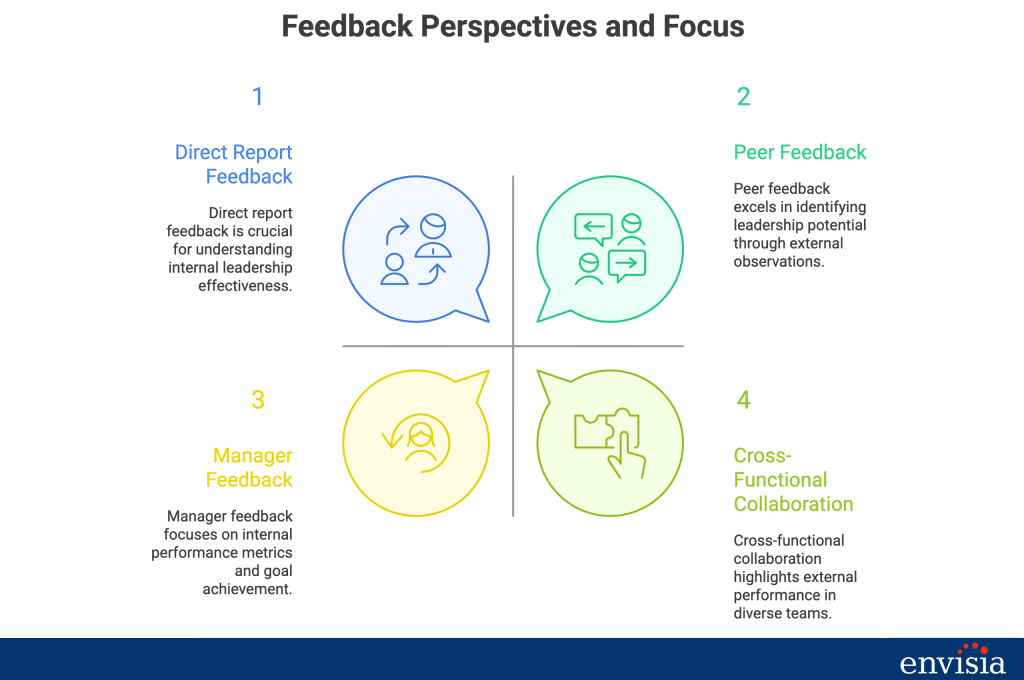
Supervisors often provide the most performance-focused feedback. Their perspective captures whether the participant meets goals, solves problems independently, and contributes without creating unnecessary work for others. Researchers sometimes refer to this as the burr in the saddle effect, which describes how much additional effort or management the person requires.
Manager feedback is particularly useful when development is connected to job performance, succession planning, or expectations for higher-level roles.
What Peers Tend to Notice
Peers see behaviors that managers rarely observe. They experience how someone collaborates, shares information, and makes decisions. This makes peer feedback especially helpful for identifying leadership potential, early signs of derailment, and strengths in cross-functional work.
In many cases, peer feedback is one of the strongest predictors of future leadership effectiveness because it reflects how well the participant influences without authority.
What Direct Reports Reveal
Direct reports offer a perspective no other group can. Their feedback reflects how the participant leads, motivates, and manages people. They see strengths and gaps in communication, delegation, coaching, and support. For participants in leadership roles, this feedback is particularly important because it highlights how their behavior shapes team culture and performance.
When direct report ratings differ significantly from peer or manager ratings, it is often a cue to explore leadership style and day-to-day management practices more deeply.
Deciding Which Feedback Deserves Focus
Prioritizing feedback is easier when participants consider their current responsibilities and future goals. A manager preparing for a broader leadership role may focus more on peer and direct report perspectives. Someone seeking to strengthen operational performance may start with supervisor feedback. Early career professionals may find peer insights more relevant to developing collaboration and influence.
The aim is not to rank rater groups but to interpret each one in relation to the individual’s development priorities.
Conclusion
360-degree feedback works best when participants recognize that every rater group brings something unique to the table. Understanding the value of each perspective helps create a more balanced interpretation of the data and supports targeted, meaningful development. When employees understand whose feedback to weigh most heavily at different stages of their careers, the process becomes far more effective.
If you want to strengthen how your organisation interprets and uses 360 degree feedback, Envisia Learning can help. Contact us to learn more about building a process that turns multi-rater insights into focused and actionable development plans.